Question · Misted and failed rooflight replacement
Can misted glass be replaced from inside?
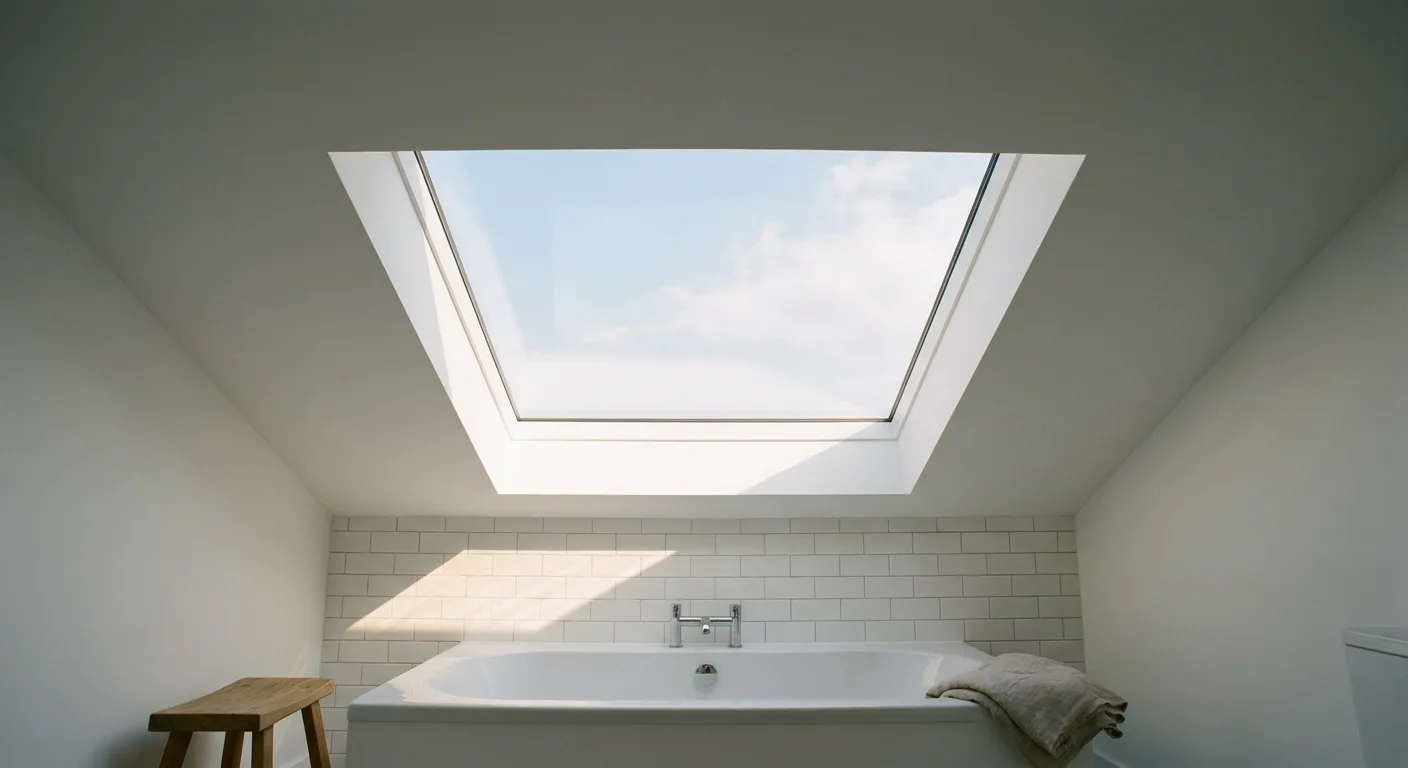
Where the glass sits decides the answer
The unit's position in the frame, not the brand or the age of the rooflight, is what makes inside access possible. A sealed unit is held by a bead, a strip that clamps the glass against a rubber gasket. If that bead sits on the room side, it can be unclipped or unscrewed from a stepladder or a tower inside the loft, and the failed unit lifted out without the roof covering being touched. If the bead sits on the weather side, over the glass facing the sky, the same job means working from the roof instead.
This is a design detail set when the rooflight was made, and it varies between manufacturers as much as it does between rooflight types, so the type alone is not a reliable guide on its own. A survey confirms which arrangement is fitted before any work is booked. Our guide to how a rooflight unit fails covers what happens inside the sealed unit itself, separate from this question of access.
Flat rooflights: usually from inside
Most flat rooflights sit on an upstand or kerb built up from the roof deck, with the glazing unit held in an inner frame set inside that kerb. The bead is almost always on the room side, so the fitter works from a platform below, lifts the old unit clear, and sets the new one on the same gaskets without disturbing the upstand, the flashing or the falls that carry water off the roof.
This is why misted flat rooflights are usually the quickest of the misted glass jobs to close out: no covering is opened, and the outside of the kerb is left alone.
Roof windows: VELUX and similar
A pitched roof window has an opening or fixed sash built into the rafters, with flashing dressed around it to shed water. The glazing bead on these units sits inside the sash, so a misted pane is normally replaced by lifting the sash, freeing the failed unit from its bead, and fitting a new sealed unit into the same sash from the room.
The flashing and the outside face of the frame are not disturbed, which is why replacing misted VELUX glazing can usually stay inside the loft or bedroom for the whole visit.
Lanterns and older units: sometimes not
A roof lantern carries its glass in bars that run from the eaves up to a ridge, and on many lanterns those bars are sealed from the outside, on top of the roof, to keep water off the joint. Where that is the case, a misted pane cannot be lifted from inside: the covering has to be opened at the bar, the failed unit removed, and the new one sealed back in from above.
Older lanterns, and some bespoke designs, are more likely to be built this way than a modern flat rooflight or roof window, though age is a clue rather than a rule. Misted roof lantern panes explains how each pane is checked on its own terms before any glass is ordered.
Conservation and steel-framed rooflights
Slim steel and conservation-style rooflights keep their glazing bars as narrow as possible, so the sightline reads close to the historic pattern they copy. That slimness is often achieved by sealing the glass from outside, with a capping strip over the weather face, because an inner bead of the same width would be too thin to hold the unit securely.
On these units, plan for the job to involve the roof, and for weather-dependent access such as a scaffold tower rather than a stepladder in the room below. Misted conservation and steel rooflights goes through how the sightline is kept once the new glass is in.
What a survey checks before the quote
The survey is where "replaced from inside" stops being a general answer and becomes a fact about your own rooflight.
- Which side of the frame holds the bead, and whether it can be reached from the room or the loft.
- The condition of the gasket the new unit will sit on, since a perished gasket is usually changed at the same time.
- Safe access: a stepladder and clear floor for many roof windows, a tower or podium for taller rooms and steeper pitches.
- Whether the frame itself has failed alongside the glass, which turns a unit swap into a fuller replacement.
| Rooflight type | Usually replaced from |
|---|---|
| Flat rooflight on a kerb | Inside |
| Roof window (VELUX and similar) | Inside |
| Roof lantern | Depends on the bar |
| Steel or conservation unit | Usually outside |
What an inside replacement involves
Working from inside still means dust and some disruption, even though the roof stays covered throughout. Furniture below is moved and sheeted, the bead is unclipped, and the old sealed unit, often heavier than it looks, is carried out through the room rather than the roof. The new unit goes in on a fresh gasket, the bead is refitted, and the frame is checked square and weathertight from underneath before the job is called finished.
Building Control and making good
Swapping a sealed glass unit for one of the same size, in the same frame, is not usually the kind of work that needs its own Building Control notification. Where the frame is also being replaced, or the opening is being changed, the notification is handled as part of that job, and we install to current Building Regulations either way, with a 10-year workmanship guarantee on the finished job. Inside, the room is left as it was found: dust sheets removed, any disturbed lining made good, and the view checked from where you actually sit or lie before we leave. Do I need Building Control to replace a misted glass unit? sets this out in full.
Whichever side the job is worked from, the aim is the same: misted and failed rooflight replacement that gives you back the clear view you had when the unit was new, confirmed with a sightline sketch before the quote, not after. Book a home visit and we will tell you which side of your rooflight the bead is on before you decide anything.
Questions people also ask
Can I tell from the ground which side my bead is on?
Sometimes. A visible capping strip or line of fixings running along the top of the glass usually means an outside bead. A frame that looks plain from below, with nothing visible on the glass itself, points to an inside bead, but a survey confirms it rather than a guess from the garden.
Does an inside replacement cost less than one worked from the roof?
It often takes less time, since no tower or roof access is needed, but the price reflects the unit itself as much as the access, so it is confirmed on your specific rooflight rather than assumed. What affects the cost of a rooflight covers the factors involved.
Will the frame be disturbed if the unit is replaced from inside?
Not if the frame itself is sound. What happens to the frame when a rooflight unit is replaced covers the bead, gasket and seal in more detail. Where the frame has also failed, see replacing the glass unit or the whole rooflight.
Is a lantern always a roof job?
Not always. Some modern lanterns use an inner bead on the ridge bar and can be reglazed from a platform inside if access allows. Misted roof lantern panes explains how this is checked bar by bar before work starts.
How quickly can an inside replacement be booked in?
Lead time depends mainly on the unit, standard sizes are quicker to source than made-to-measure glass, rather than on which side the job is worked from. How quickly can a failed rooflight be replaced? covers what affects the wait.
Book a home visit
Tell us which room
- No obligation
- Sightline sketch included
- 10-year guarantee
Or call 01733 736163